Skip to content
Predatory Botany2026-07-13T11:19:13+00:00
As they turned the pages of these books, most 18th and 19th century readers would have overlooked the cruelties underlying the production of every botanical image. As Adorno wrote in Aesthetic Theory about Nazi art, “The more torture went on in the basement, the more insistently they made sure that the roof rested on columns.”
We can think of the material experiences of colonizers and enslaved as diverging in degrees of hunger and pain. According to Hans Sloane’s medical accounts, susceptibility to disease was exacerbated for plantation owners by excessive eating and drinking, and for the enslaved by poor nutrition and overwork.
Fictional narratives like Toni Morrison’s Beloved or Octavia Butler’s Kindred may be the most effective at conveying a material immediacy to slavery. Yet, besides their contents, the material properties of the books looked at here also offer an understanding of how they come out of the repressive conditions of the plantation. For plantation regimes the experiences of noise and silence were also functions of privilege and repression. As an acoustic event, the sound of book pages turning would have signaled an insurmountable barrier between the literate plantation class and the enslaved worker who was invariably subject to punishment if caught learning to read.
Although few finished volumes, after being printed in Europe, would have made their way back to subscribers in the colonies, their status as luxury commodities only amplified the inequalities that books helped to enforce under slavery. Because of the quality and size of their paper, binding, age, and amount of ink in the illustrations, the sound signatures are different for each of them.
The books’ sonorities that conferred status as a soundtrack to colonial education and wealth still signal the sonic and botanical color lines that separated Black from white.
Here then, repeatedly, is the sound of the pages turning.
 Predatory Botany shown in the exhibition BOOK at the Beeler Gallery, Columbus, Ohio, 2025
 Predatory Botany still image
Predatory Botany still image
Predatory Botany still image

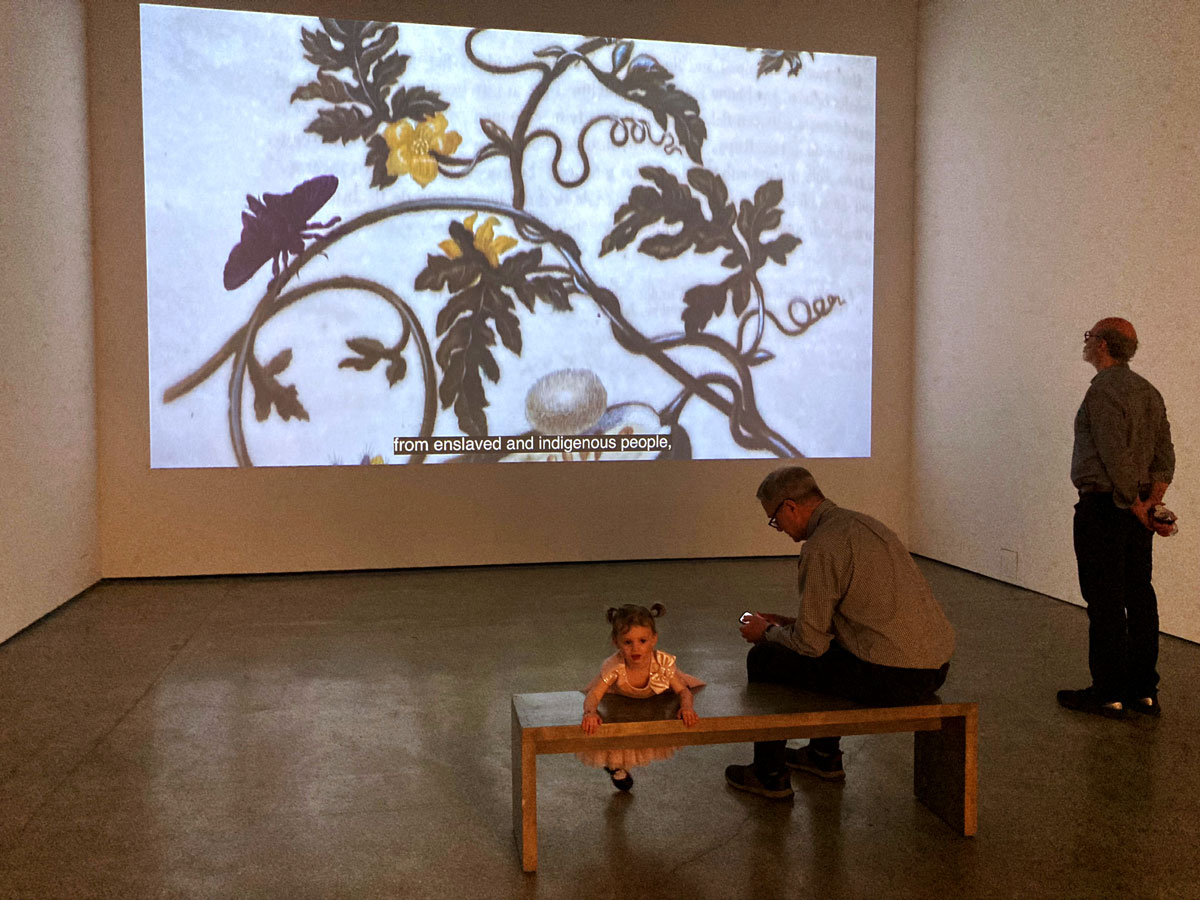 Predatory Botany shown in the exhibition BOOK at the Beeler Gallery, Columbus, Ohio, 2025
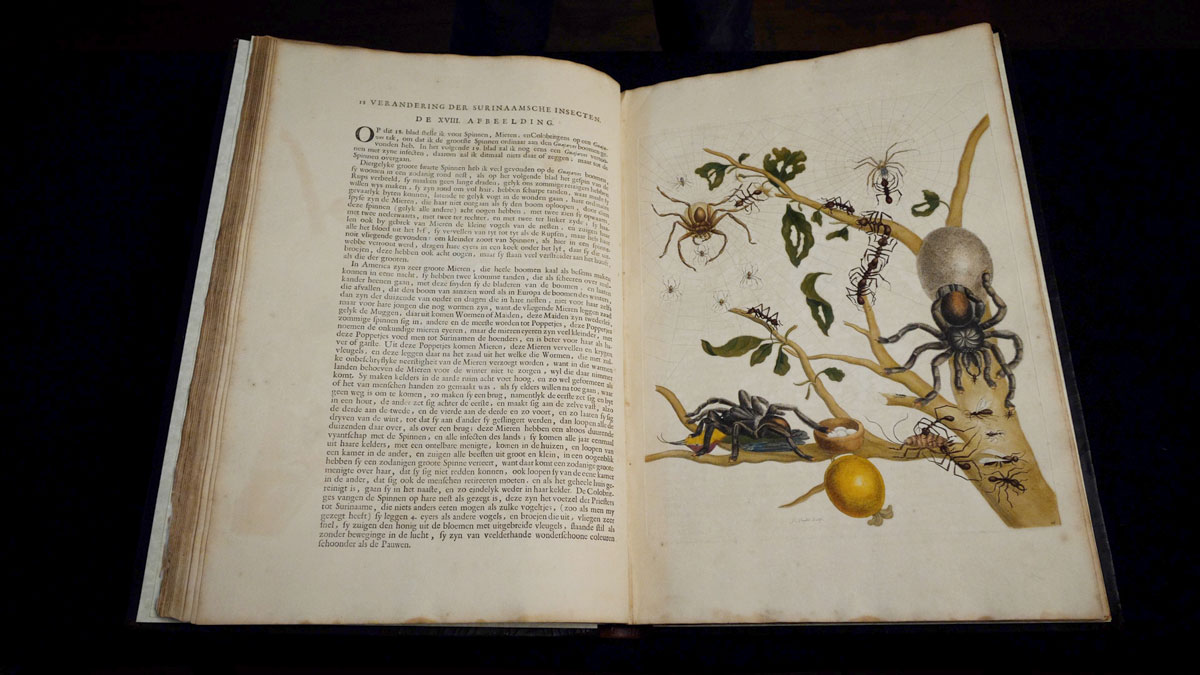 Predatory Botany still image
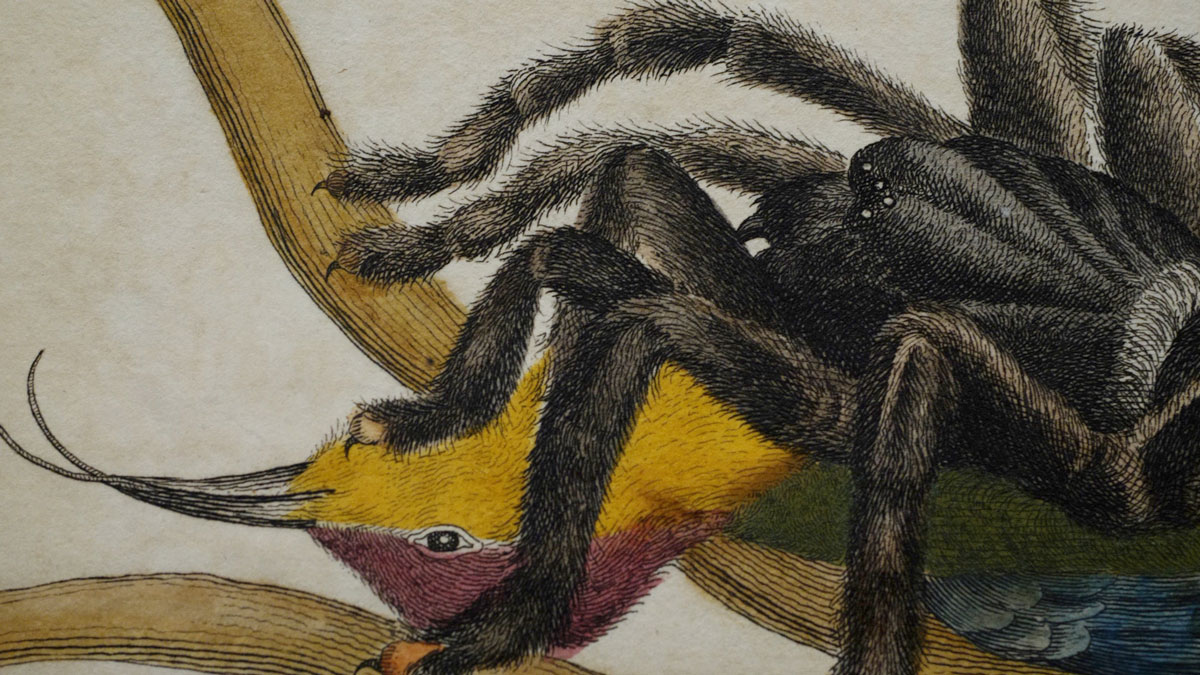 Predatory Botany still image
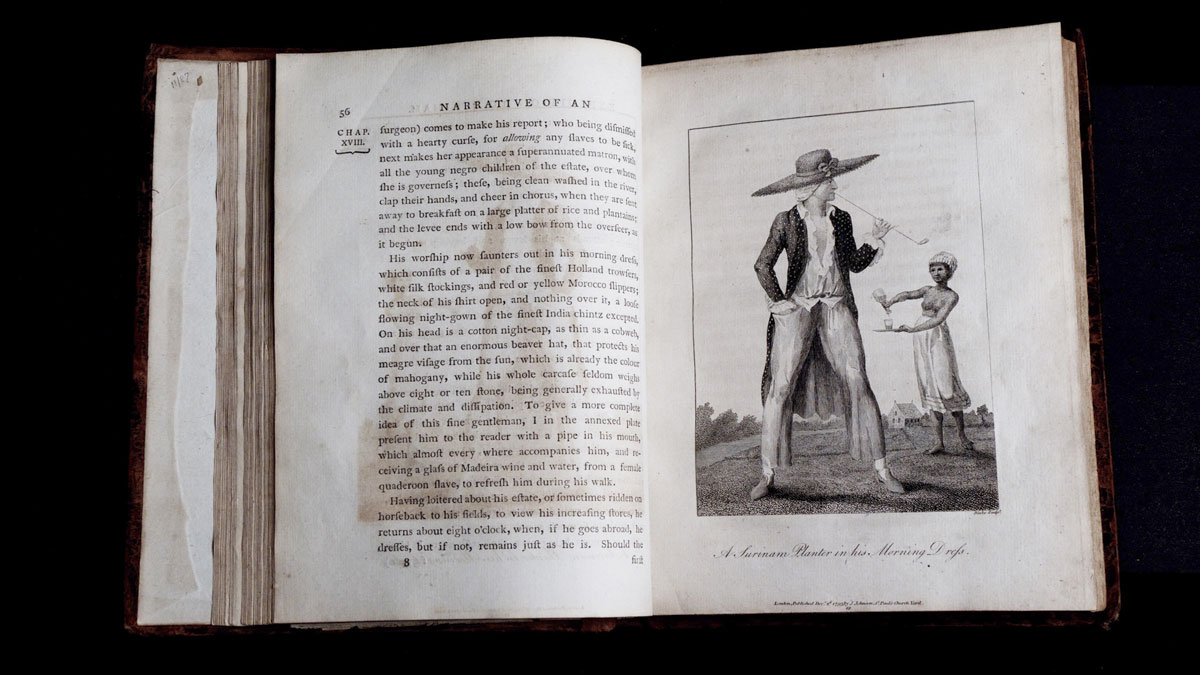 Predatory Botany still image